The list
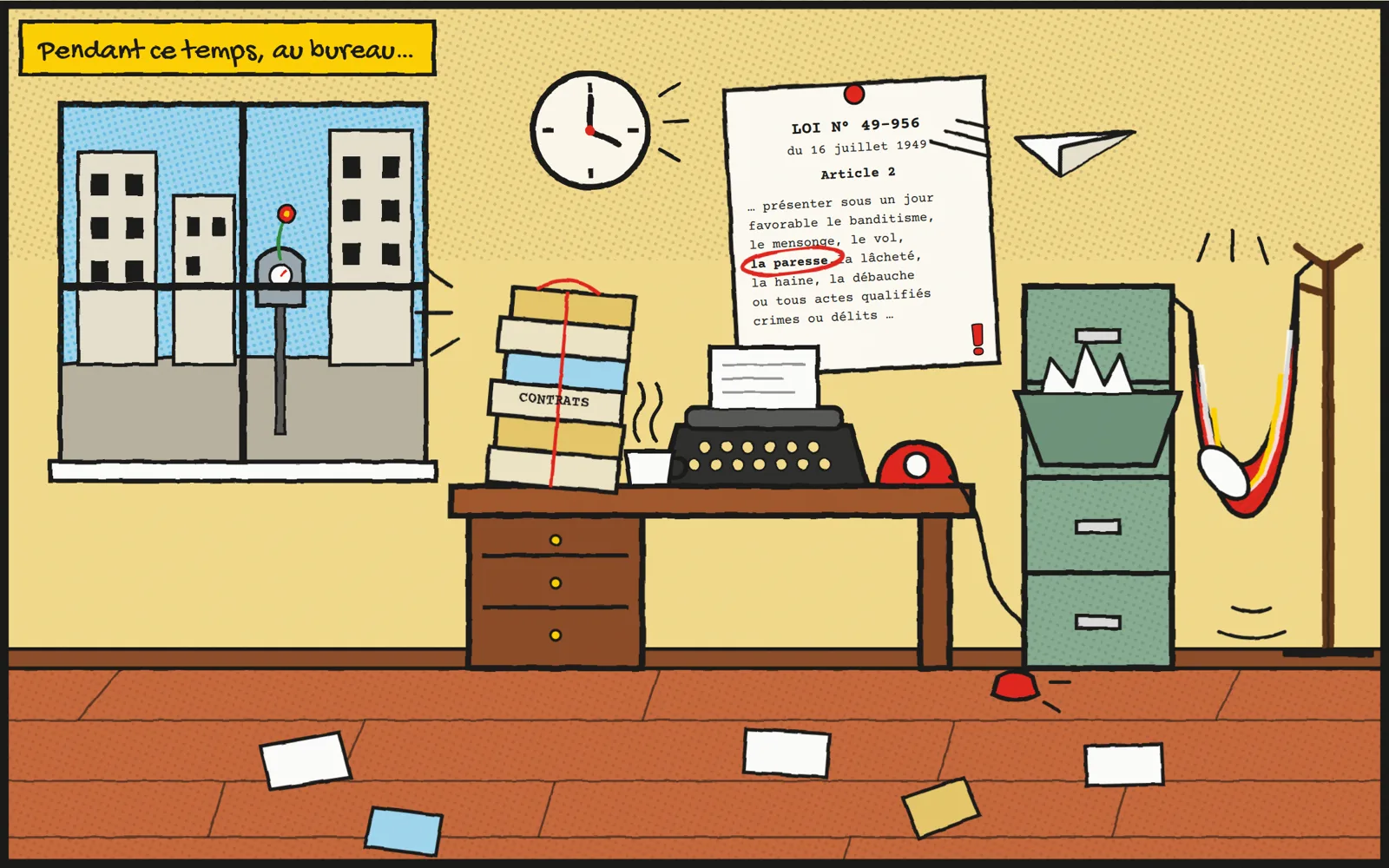
France wrote a law about what children could read. It named the vices a page must never make look good. Laziness was fourth.
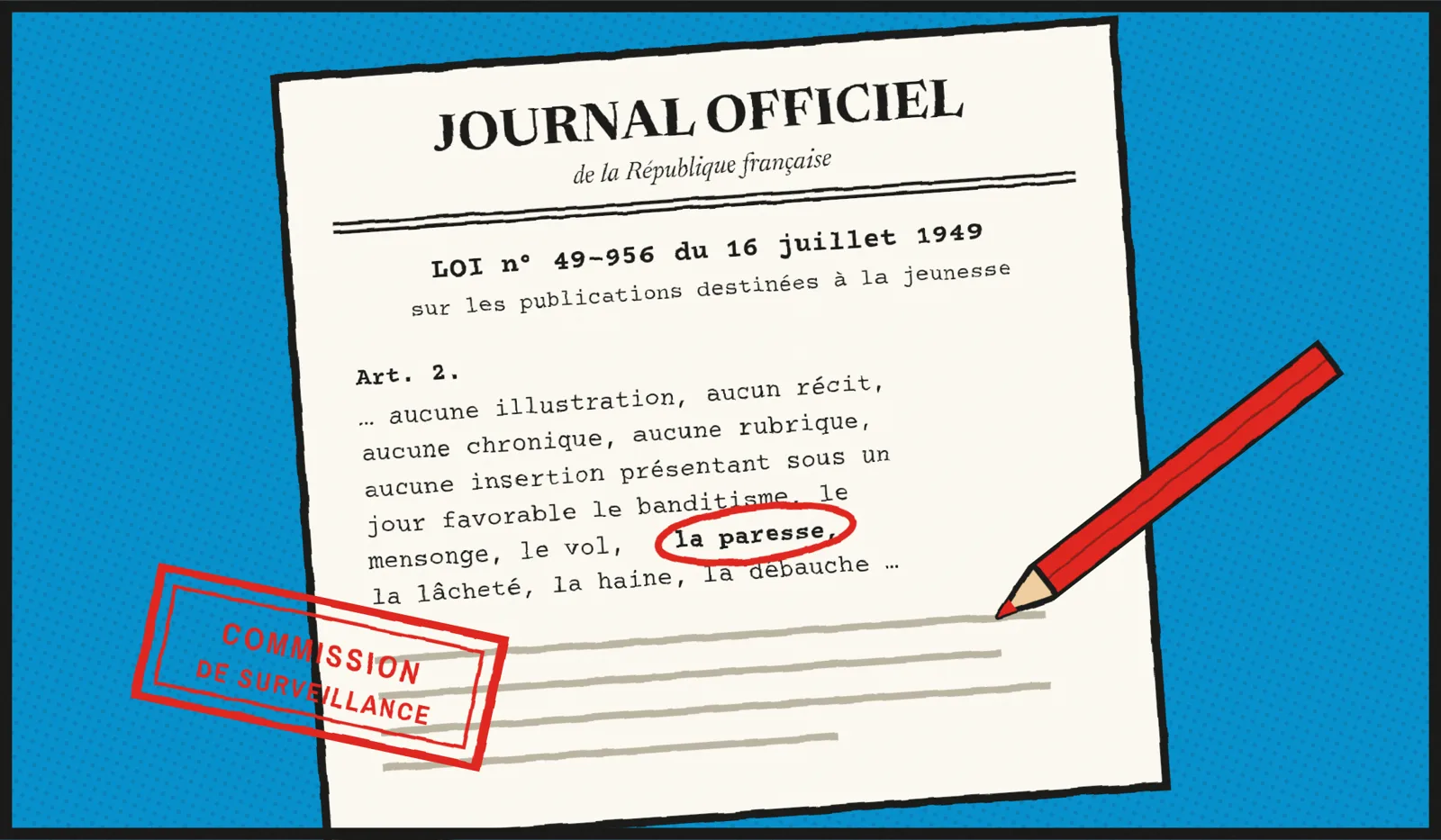
On 16 July 1949 France passed Law no. 49-956 on publications intended for young people. It covered every illustrated weekly a child could buy at a kiosk, French or imported.
Loi n° 49-956, article 2 (1949)
« Les publications visées à l’article 1er ne doivent comporter aucune illustration, aucun récit, aucune chronique, aucune rubrique, aucune insertion présentant sous un jour favorable le banditisme, le mensonge, le vol, la paresse, la lâcheté, la haine, la débauche ou tous actes qualifiés crimes ou délits ou de nature à démoraliser l’enfance ou la jeunesse. » The publications covered by Article 1 must contain no illustration, no story, no column, no feature and no insert that presents in a favourable light banditry, lying, theft, laziness, cowardice, hatred, debauchery, or any act defined as a crime or offence or likely to demoralise children or young people. Text of 1949, reprinted in Enfance, 1953 · current text on LégifranceArticle 3 set up a commission at the Ministry of Justice to watch and control publications for children and adolescents. The law also let the Minister of the Interior ban any publication dangerous to youth from sale to minors, from public display and from advertising. That power reached adult magazines too, and it was used.
Belgium had no such censorship. It did not need one. Belgian weeklies earned their living in France, so the French commission read them. In 1952 it issued a warning over André Franquin’s Les Voleurs du Marsupilami. The same year Dupuis cut a Lucky Luke story by Morris to please the commission. Charles Dupuis put every submission through a pre-censorship of his own, with the family priest checking the religious rules.
“Cette créature absurde et imaginaire pousse des cris inarticulés.”The commission, 1952, on the Marsupilami: “this absurd and imaginary creature utters inarticulate cries”
The list held for sixty-two years. A 1954 amendment added ethnic prejudice, a 2010 amendment added sexism, and in May 2011 the article was rewritten from top to bottom. Laziness came off the list then, and not before.
The office boy
Eight years after the list, a Catholic children’s weekly gave its pages to a young man whose whole talent was not working.
Dupuis was a Catholic printing house in Marcinelle, near Charleroi, started by Jean Dupuis in 1898. Its weekly, Spirou, first appeared on 21 April 1938. In the 1950s it was a family magazine sold to children in Belgium and France.
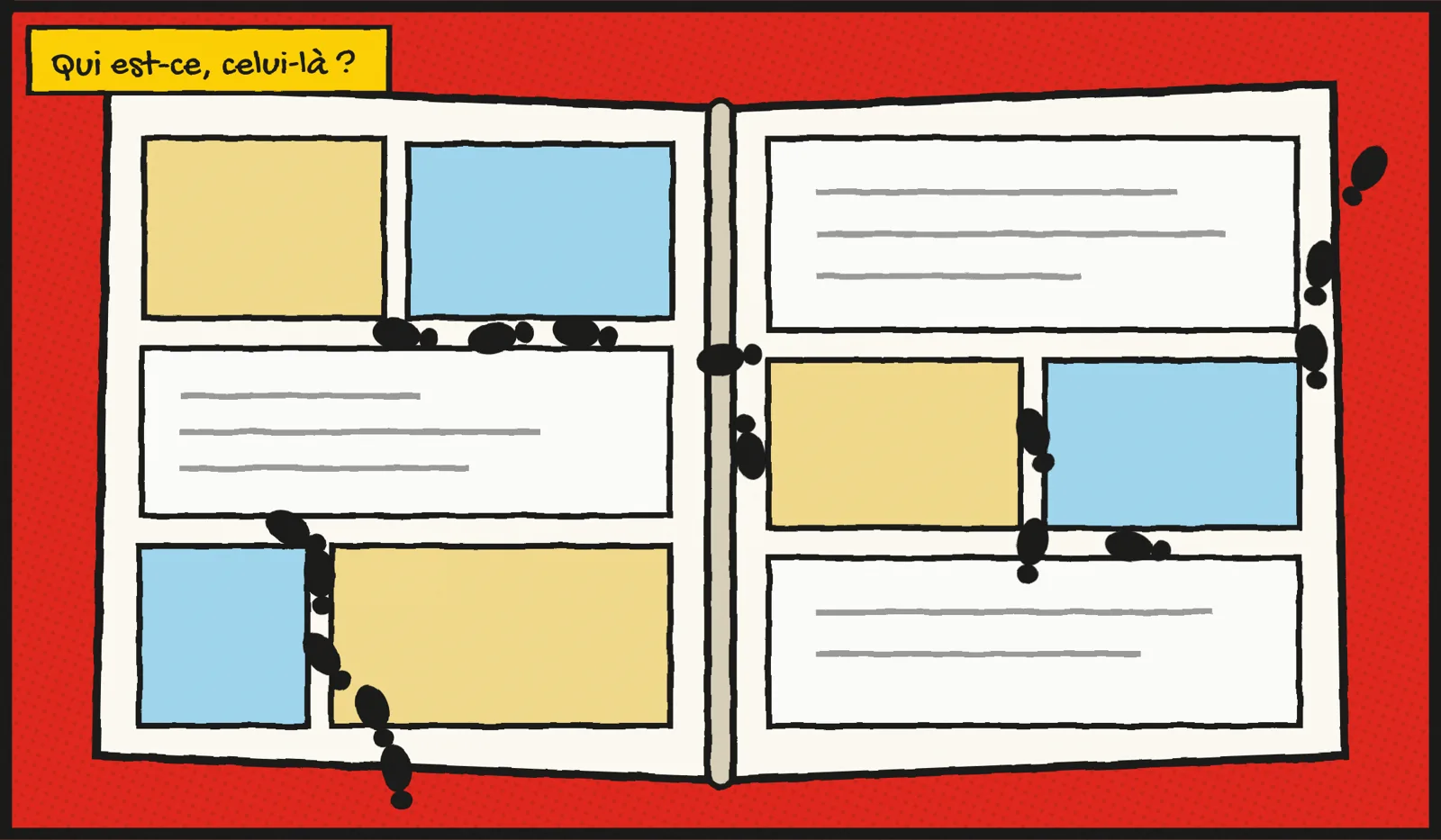
On 28 February 1957, in issue 985, footprints appeared in the margins. Then a young man walked through the magazine, with no name, no lines and no explanation. Franquin called him “un héros sans emploi”: a hero without a job. The editor-in-chief who let him in was Yvan Delporte, in charge of Spirou from 1955 to 1968, a man the Lambiek comics encyclopedia describes as having “an anarchist and provocative nature”.
His name was Gaston Lagaffe. By issue 1000, on 13 June 1957, he had walked into the comics themselves. From issue 1025, on 5 December 1957, he had his own weekly half-page, drawn by Franquin with Jidéhem. The job he finally got was office boy at the magazine. He slept at work, invented machines that exploded, kept animals in the office, and did not deliver the mail.
“M’enfin !”Gaston’s catchphrase, borrowed from a verbal tic of Jidéhem
A gag is hard to censor. The law asked whether a page showed laziness in a favourable light. In a gag the lazy one always pays: the boss shouts, the machine explodes, the work piles up. On paper, every page punished him. The reader still finished every page on his side. A commission trained to read a story for its moral found nothing to read, because a gag has no moral. It has a laugh, and the laugh takes a side.
The law left its mark on the strip anyway. The editor Prunelle swears “Rogntudju!”, a word Franquin built from the Walloon oath for “in the name of God”, because a real oath could not be printed in a youth weekly.
No message, every target
The office boy got in the way of everything a well-run world depends on. Week after week, the gags picked the same targets.
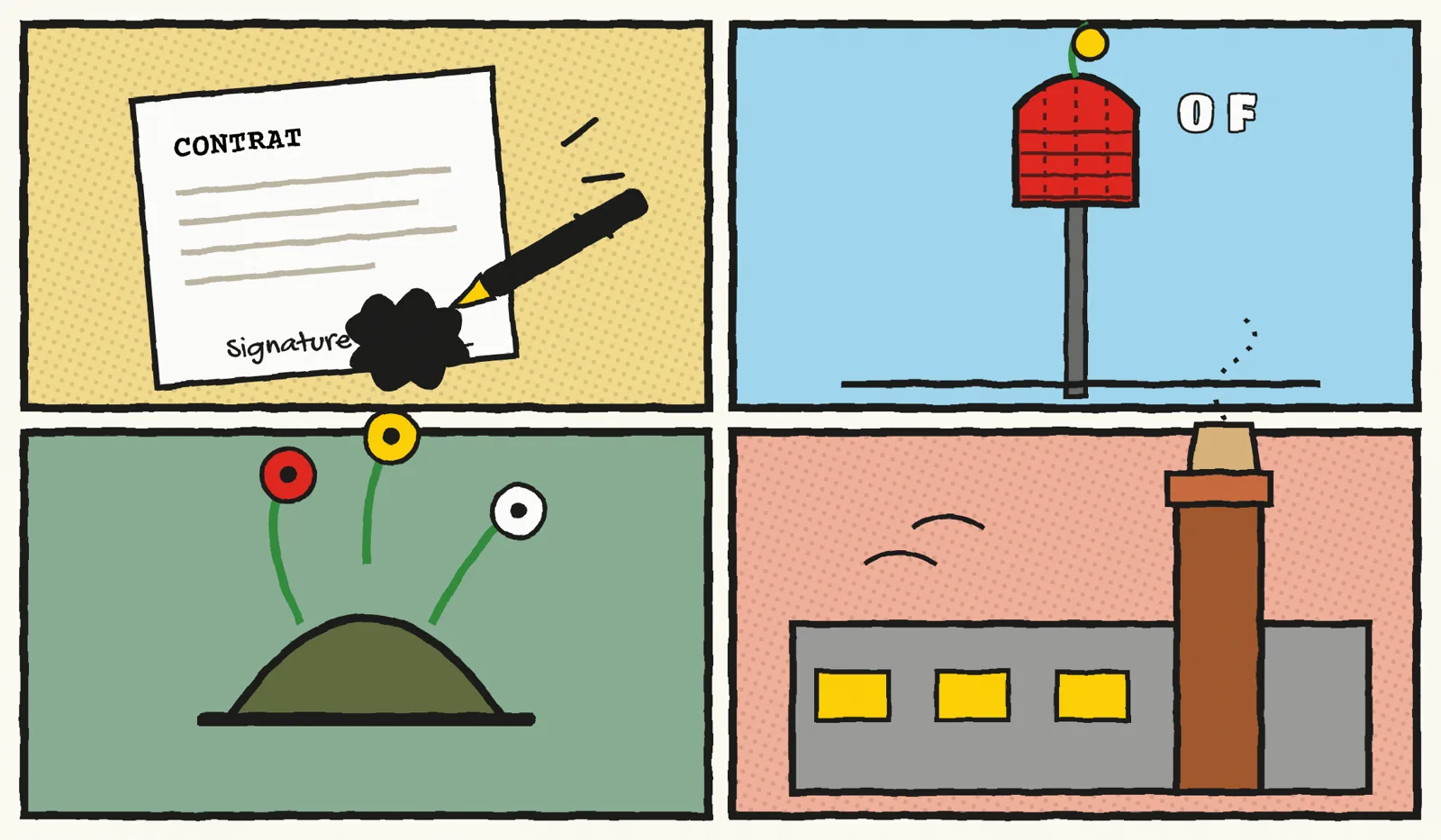
- The contractMonsieur De Mesmaeker, a businessman, comes to the office to sign contracts. Something always stops him: a gadget, a pet, a flood, Gaston. The running gag was suggested by the writer Greg, and the contracts stay unsigned.
- The bossFirst Fantasio, then from 1968 the editor Prunelle: the office hierarchy, permanently losing an argument with an office boy who does not argue.
- The uniformAgent Longtarin, the local policeman, and his parking meters. In the late 1970s the strip ran a war on parking meters, and Spirou printed stickers for readers: “You have paid to drive, now pay to stop.”
- The bomb and the chimneyFranquin took a clear stance against pollution, nuclear power, the arms race and the death penalty, with strong anti-militarist feelings, and the gags followed him there.
In 1968, according to the Centre Pompidou, Dupuis received a letter from the authorities asking it to rein in Franquin’s jabs at the police. In 1978 Franquin drew a page for Amnesty International showing Gaston tortured and hanged. In the 1980s Gaston worked on posters for UNICEF and Amnesty.
“Ce n’est ni un bourgeois, ni un anarchiste. Gaston est… disons, un étourdi, un clown. […] Je n’ai aucun message culturel ou politique à délivrer.”André Franquin, 1979: “He is neither a bourgeois nor an anarchist. Gaston is, let us say, a scatterbrain, a clown. I have no cultural or political message to deliver.”
Franquin said it plainly, and more than once: he was not a political cartoonist, his opinions leaned left and he kept them out of his comics. Take him at his word. The law of 1949 never asked what an author meant. It asked what a page showed, and in what light. For thirty years a children’s weekly showed a young man who would not work, would not obey, would not sign and would not salute, and showed him as the one you liked.
Gloves off
Twenty years in, Franquin and Delporte stopped smuggling and printed a pirate inside the magazine.
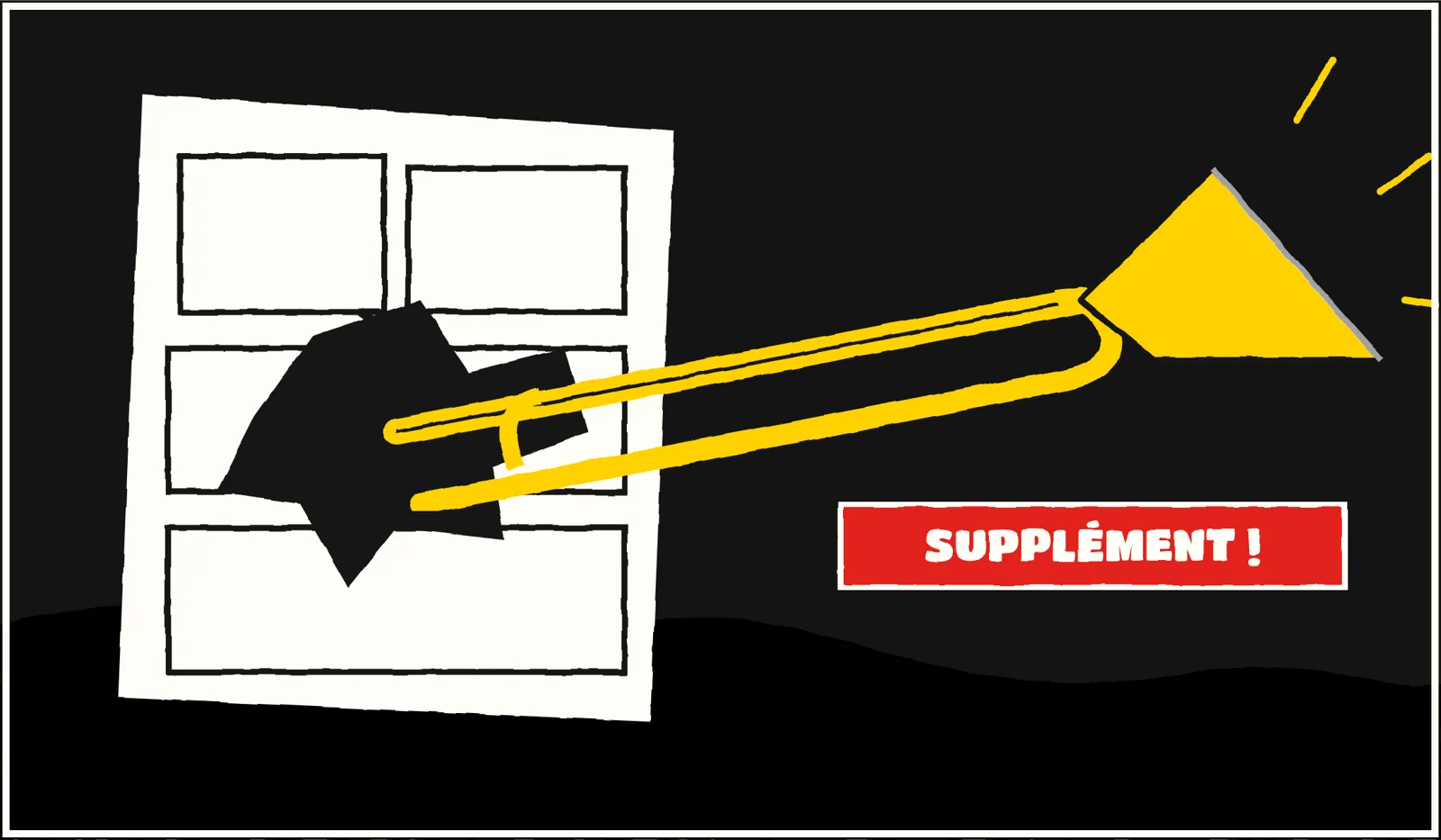
Le Trombone illustré ran from 17 March to 20 October 1977: thirty issues, stapled inside Spirou as a supplement. Franquin and Delporte made it. Dupuis ended it.
It is where Idées noires began: Franquin’s black pages, drawn in ink with almost no colour at all. When the Trombone was shut, the strip moved to Fluide Glacial, the adult humour monthly Gotlib, Alexis and Jacques Diament had founded on 1 April 1975, at Gotlib’s suggestion. It ran there until May 1983 and came out as albums in 1981 and 1984.
The children’s magazine had carried the office boy for twenty years. The dark pages needed an adult magazine to print them, and they got one.
The rest of the kiosk
Gaston was the quiet one. On the same racks, the loud ones were banned, seized and fined.
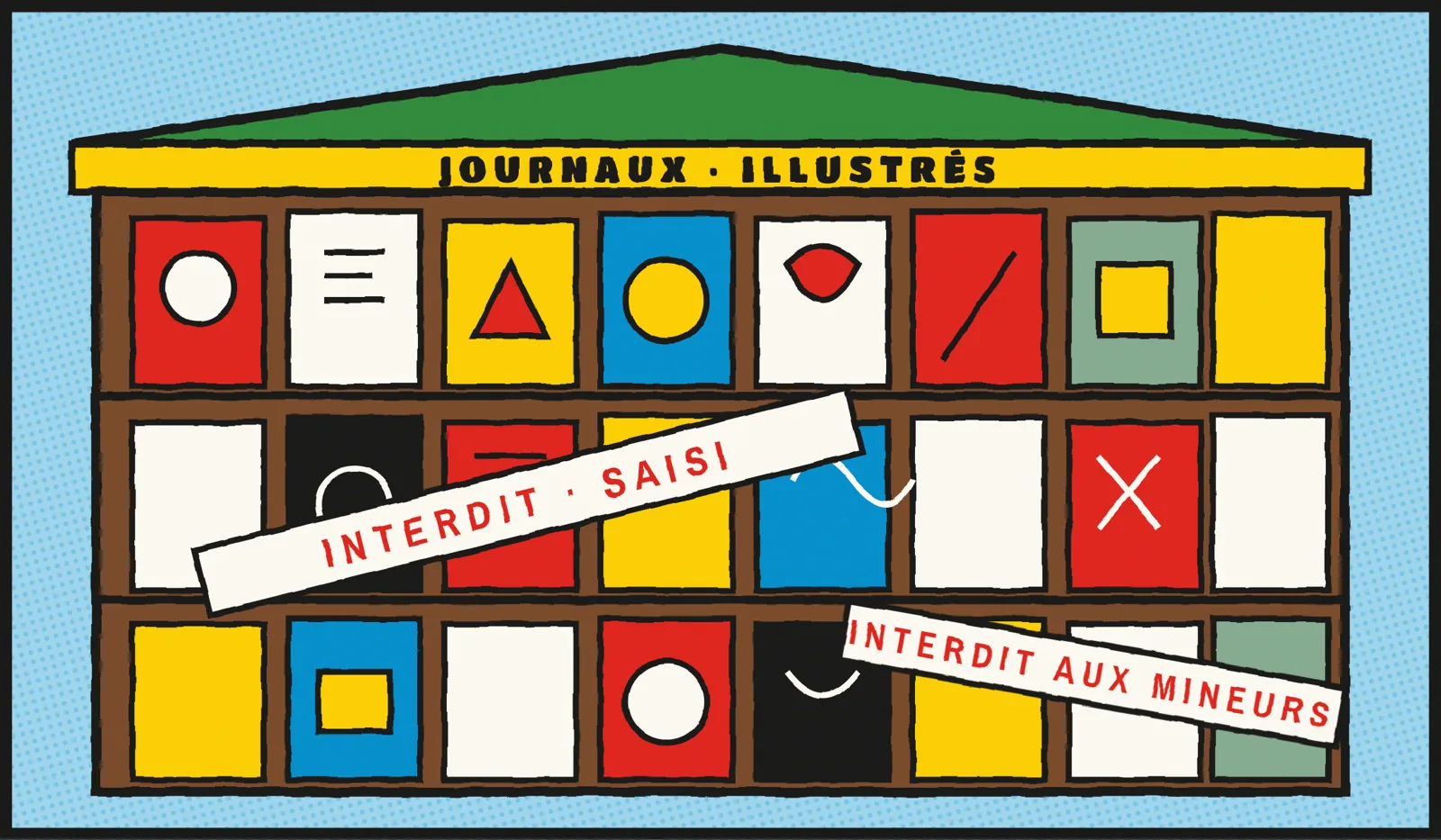
Laziness was a political idea long before it was a vice on a list. Paul Lafargue’s Le Droit à la paresse, The Right to Be Lazy, ran in the socialist paper L’Égalité in 1880. Seventy years later the people around Gaston were paying for less.
- 1946–1954
Boris Vian
J’irai cracher sur vos tombes, published in 1946 under the name Vernon Sullivan, was banned in 1949. Vian was convicted of offending public morals in 1950 and fined 100,000 francs. His song Le Déserteur, recorded by Mouloudji on 14 May 1954, was barred from French radio. - 1952
Georges Brassens
Le Gorille was kept off French radio and Radio Luxembourg. Europe 1 first played it in 1955. - 1954–1955
The Comics Code
After US Senate hearings in April and June 1954, American publishers adopted the Comics Code in October. MAD turned into a magazine with issue 24, in July 1955, which took it out from under the Code. - 1957
The Situationist International
Founded in July 1957 at Cosio di Arroscia in Italy, the year of Gaston’s first footprints. The Belgian Raoul Vaneigem wrote its Traité de savoir-vivre à l’usage des jeunes générations in 1967, and later an essay called Éloge de la paresse affinée, in praise of refined laziness. He died in Barcelona in July 2026, aged 92. - 1958
The Smurfs
Peyo’s Smurfs first appeared in Spirou on 23 October 1958, inside a Johan et Pirlouit story. Yvan Delporte went on to write many of their stories. - 1959
Pilote
The French weekly of Goscinny, Uderzo and Charlier, first issue 29 October 1959. - 1960–1966
Hara-Kiri
Founded in September 1960 by Cavanna and Georges Bernier, the Professeur Choron. Fred drew the first cover; Cabu, Gébé, Topor and Wolinski had joined by 1961. The monthly was banned in 1961 and again in 1966. - 1964
Barbarella
Jean-Claude Forest’s album, published by Éric Losfeld in 1964, was banned for minors at once under the 1949 law. The 1968 printing was retouched at the censor’s request. - 1969
Léo Ferré
Les Anarchistes, recorded in 1969. - 1970
“Bal tragique à Colombey – 1 mort”
Charles de Gaulle died on 9 November 1970. L’Hebdo Hara-Kiri no. 94 went on sale on the 13th with that front page. On 17 November the Minister of the Interior, Raymond Marcellin, banned it from sale to minors, from display and from advertising, using the youth law of 1949. The team renamed the paper. Charlie Hebdo no. 1 is dated 23 November 1970. - 1972–1975
Adults only
L’Écho des savanes, by Bretécher, Gotlib and Mandryka, in May 1972. Fluide Glacial in April 1975. Métal hurlant in January 1975, from Les Humanoïdes Associés: Dionnet, Druillet, Moebius and Farkas.
The law built for children ended up as a weapon against adult satire, and the satirists answered by founding magazines a child could not buy. The office boy never needed one. He stayed in the children’s weekly, on the kiosk rack at child height, every week.
Under contract
The man who never got a contract signed came back because of one.
André Franquin was born in Etterbeek on 3 January 1924 and died on 5 January 1997. His daughter, Isabelle Franquin, says her father told her personally that he did not want Gaston drawn by anyone else.
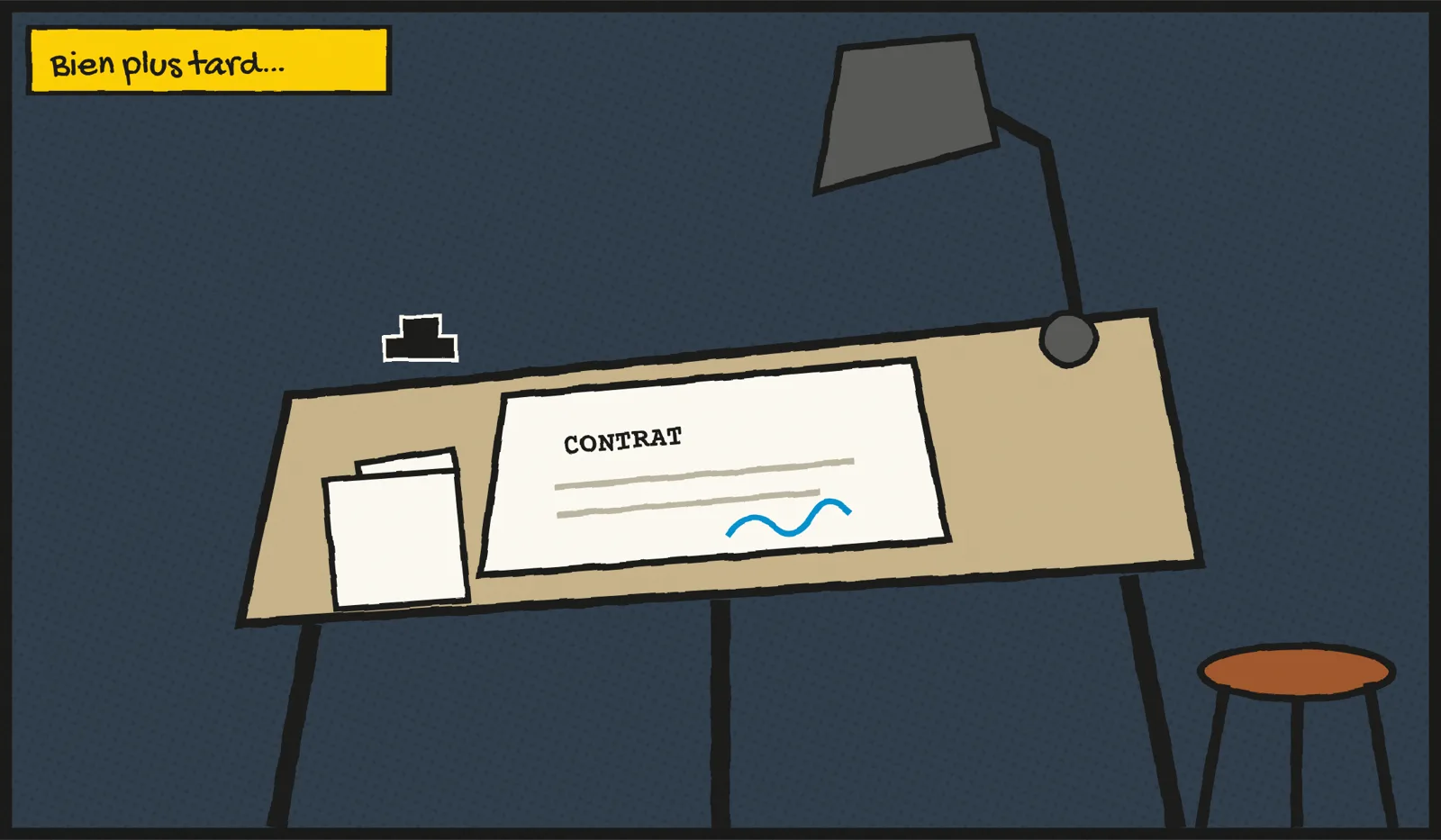
Dupuis announced a new Gaston album for October 2022. She went to court. In May 2022, before a Brussels judge, Dupuis undertook to publish nothing until an arbitrator ruled. The award came on 30 May 2023 and rested on a contract from 1992: Dupuis may continue Gaston, must consult her and report to her every six months, and she may object to anything that distorts the work. The award is final.
Le Retour de Lagaffe, drawn by Delaf, came out on 22 November 2023. Dupuis had announced 1.2 million copies; Livres Hebdo reported 800,000 printed, and it topped the GfK sales chart in its first week. Isabelle Franquin did not endorse it: “Je ne puis aller contre la volonté de l’auteur.” I cannot go against the will of the author.
Monsieur De Mesmaeker spent decades trying to get one contract signed and never did. Laziness left French law in May 2011. Twelve years later the laziest man in comics went back to work, on a contract signed in 1992.